
Comparison

Fridges for a 15-inch slot: eight models and the space each needs

A 15-inch slot is the most common place for a built-in fridge. Here are eight models sold for one, with the room each manual says it needs. We haven't tested them.

We haven’t tested these fridges ourselves. We read the manuals so you don’t have to. Some links on this page earn us a commission, at no extra cost to you. Details.

From the frontFrom the sideWidthHeightOutletDepthBaseboards andpipes steal depthKeep the smallest figure in each direction.
Measure the opening first. Keep the smallest figure in each direction.

How we chose these

Each one is sold for built-in use, is no wider than 15 inches, and has a manual from its maker that we read. We haven’t tested any of them. They’re grouped by what you’re chilling, then by how much the manual tells you. That’s not a ranking.

The short answer

A slot exactly 15 inches wide is tight. Once you add the side gaps their manuals ask for, the Summit and Whynter 15-inch models all need a bit more than 15 inches. Yet Summit’s own cutout tables list a 15-inch opening, and Whynter lists 15 or 15.05 inches. If your slot is 15 inches, ask the maker which figure to follow, in writing.

The NewAir models are the reverse problem: their manuals give no air gaps at all. They fit the slot on paper, but you won’t know how much air they need until NewAir tells you.

The space each one needs

All figures are inches, from each maker’s documents. “Needs” adds the built-in air gaps to the body, and that sum is our math.

ModelBody, W × D × HBuilt-in gaps (sides, back, top)Needs, W × D × H
Summit SCR1536BG14.75 × 22.75 × 34.00¼, 2, ⅛15.25 × 24.75 × 34.13
Summit ALBV1514.88 × 23.63 × 32.00¼, 2, ⅛15.38 × 25.63 × 32.13
Whynter BBR-838SB14.75 × 22.25 × 34.00¼, not stated, ¼15.25 × ask × 34.25
Whynter BBR-801BG15.00 × 22.50 × 33.75¼, not stated, ¼15.50 × ask × 34.00
NewAir ABR-96014.80 × 22.60 × 33.75Not statedAsk NewAir
Summit CL155WC114.88 × 22.88 × 34.00¼, 2, ⅛15.38 × 24.88 × 34.13
NewAir AWR-290DB14.80 × 22.60 × 33.75Not statedAsk NewAir
Whynter BWR-208SB11.75 × 22.50 × 34.00¼, not stated, ¼12.25 × ask × 34.25

Watch the depth too. Summit asks for 2 inches behind the fridge, so its models need 24.75 to 25.63 inches front to back. Handles stick out in front as well: the ALBV15 is 25.38 inches deep with its handle.

Want to try your own numbers? The Will it fit? tool checks all of these at once.

For cans and drinks
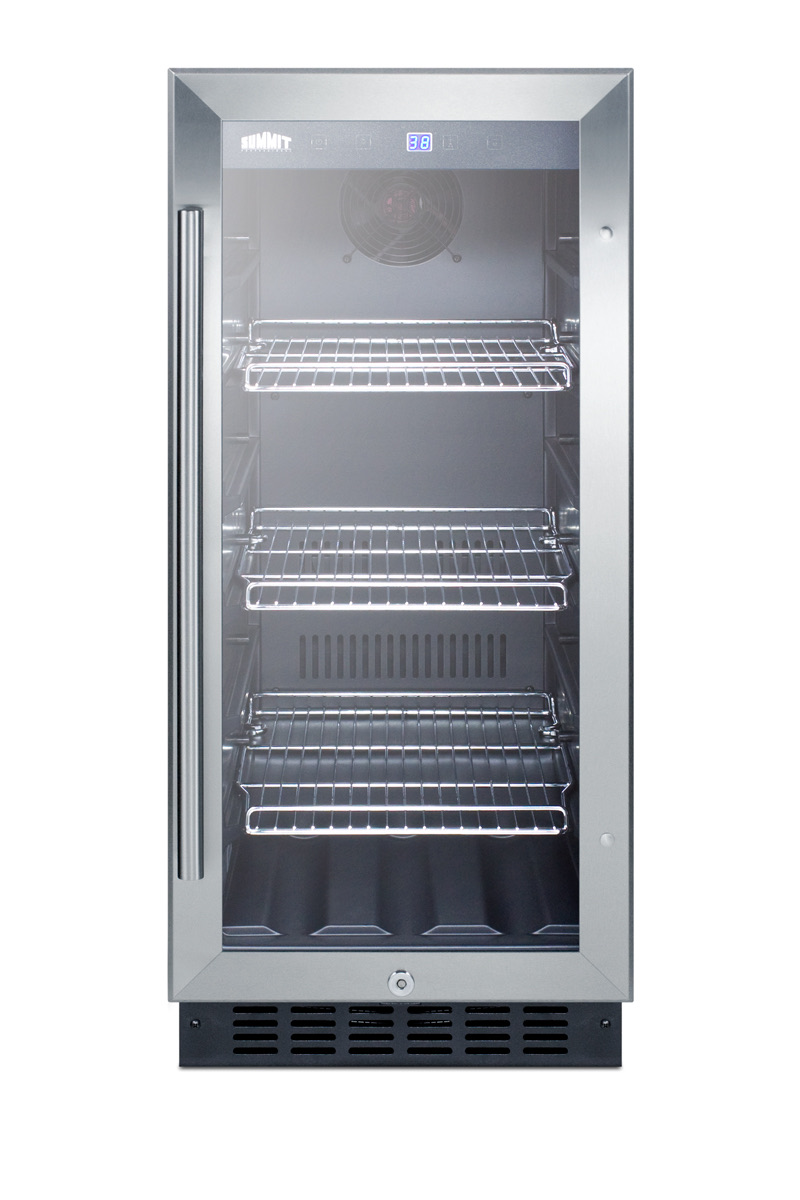
Summit SCR1536BG beverage center with a black cabinet, stainless-trimmed glass door and chrome shelves

Every built-in gap in the manual

Summit SCR1536BG

2.45 cu ft · 14.75 in wide · one zone

Needs 15.25 × 24.75 in with its gaps. Summit's cutout table says 15 in wide, so ask which to follow.

Check price at Amazon (opens in a new tab)
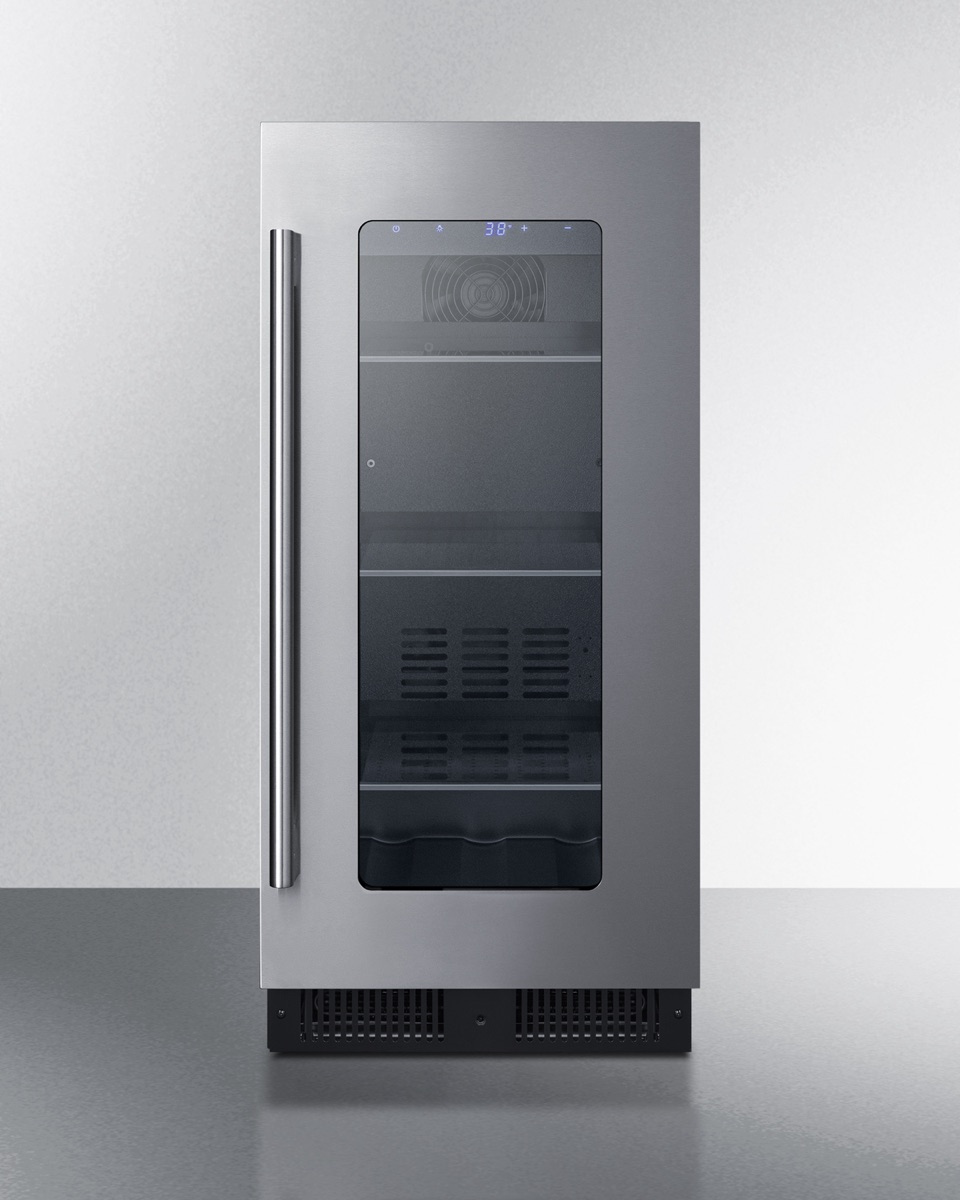
Summit ALBV15 beverage center with a stainless-trimmed glass door, lock and front grille

For a lower, 32-inch counter

Summit ALBV15

2.6 cu ft · 32 in tall · one zone

Sized for ADA-height counters. With its back gap it needs 25.63 in of depth.

Check price at Amazon (opens in a new tab)
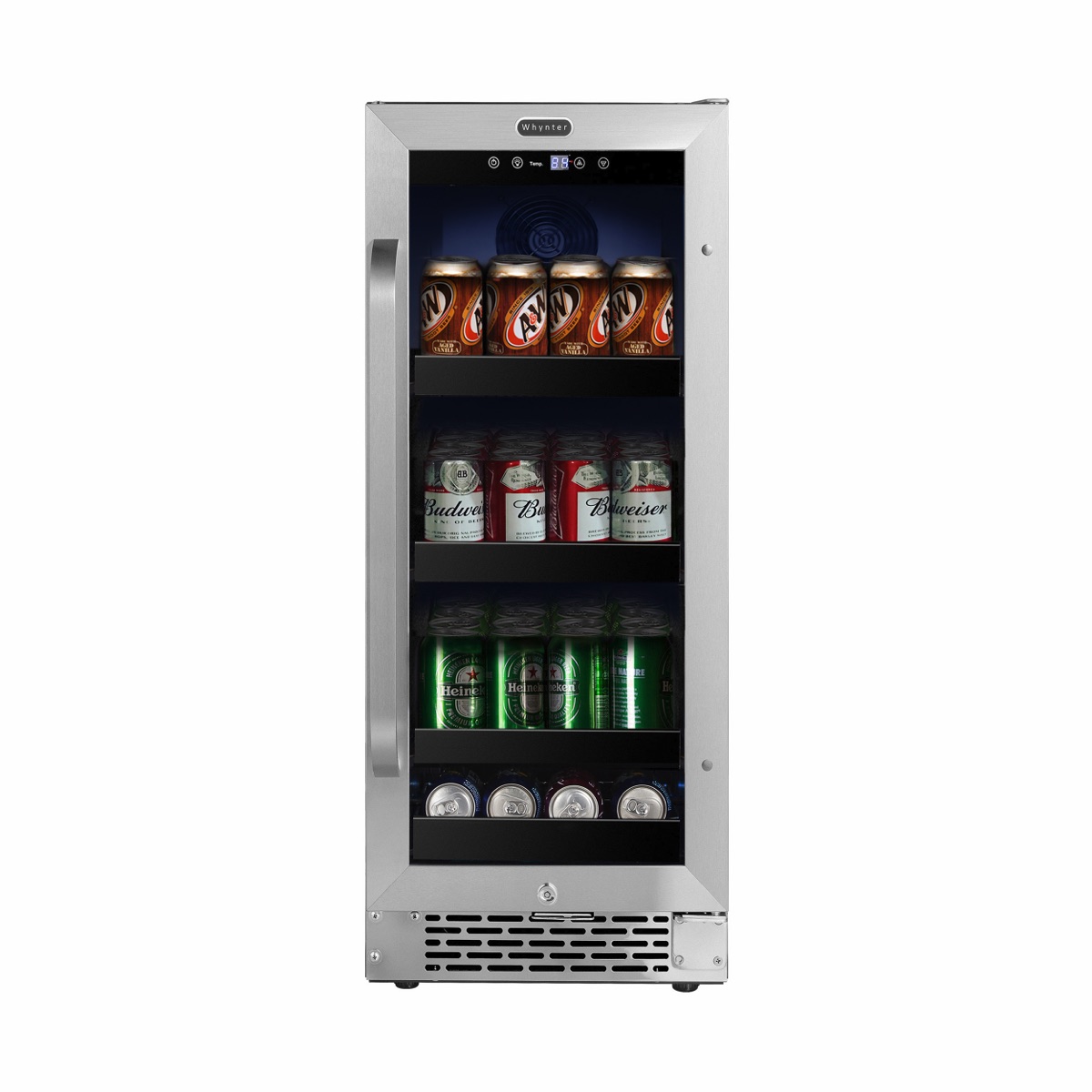
Whynter BBR-838SB beverage fridge with a stainless-trimmed glass door, lock and front vent, stocked with cans

Rated for 112 cans

Whynter BBR-838SB

112 cans · 14.75 in wide · one zone

That's the manual's count. Ask Whynter about the back gap before you build it in.

Check price at Amazon (opens in a new tab)
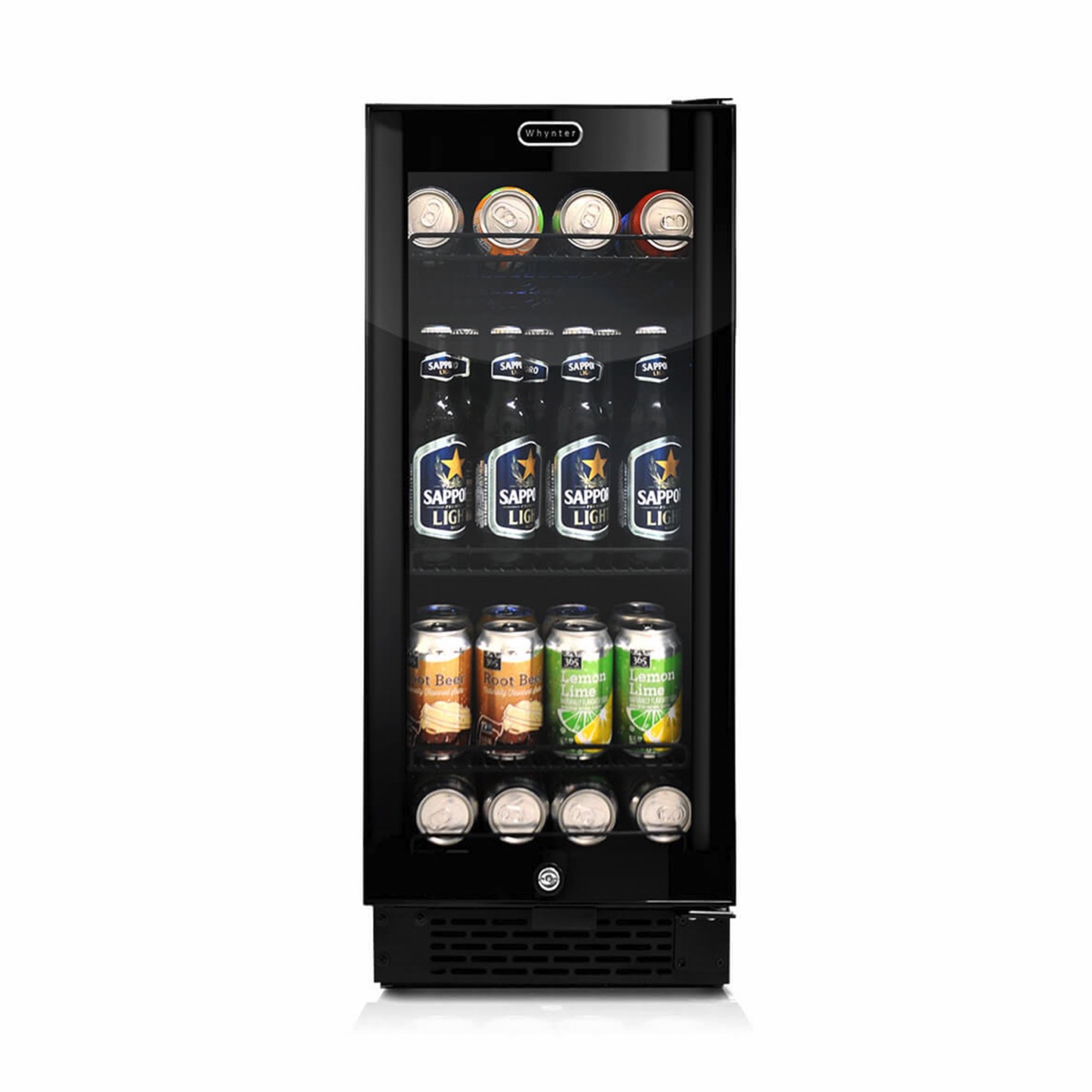
Whynter BBR-801BG black beverage fridge with a glass door and lock, stocked with cans and bottles

All black, with a recessed handle

Whynter BBR-801BG

100 cans · 15 in wide · one zone

The body is a full 15 in wide, so it needs 15.50 in with its side gaps. Ask Whynter about the back.

Check price at Amazon (opens in a new tab)
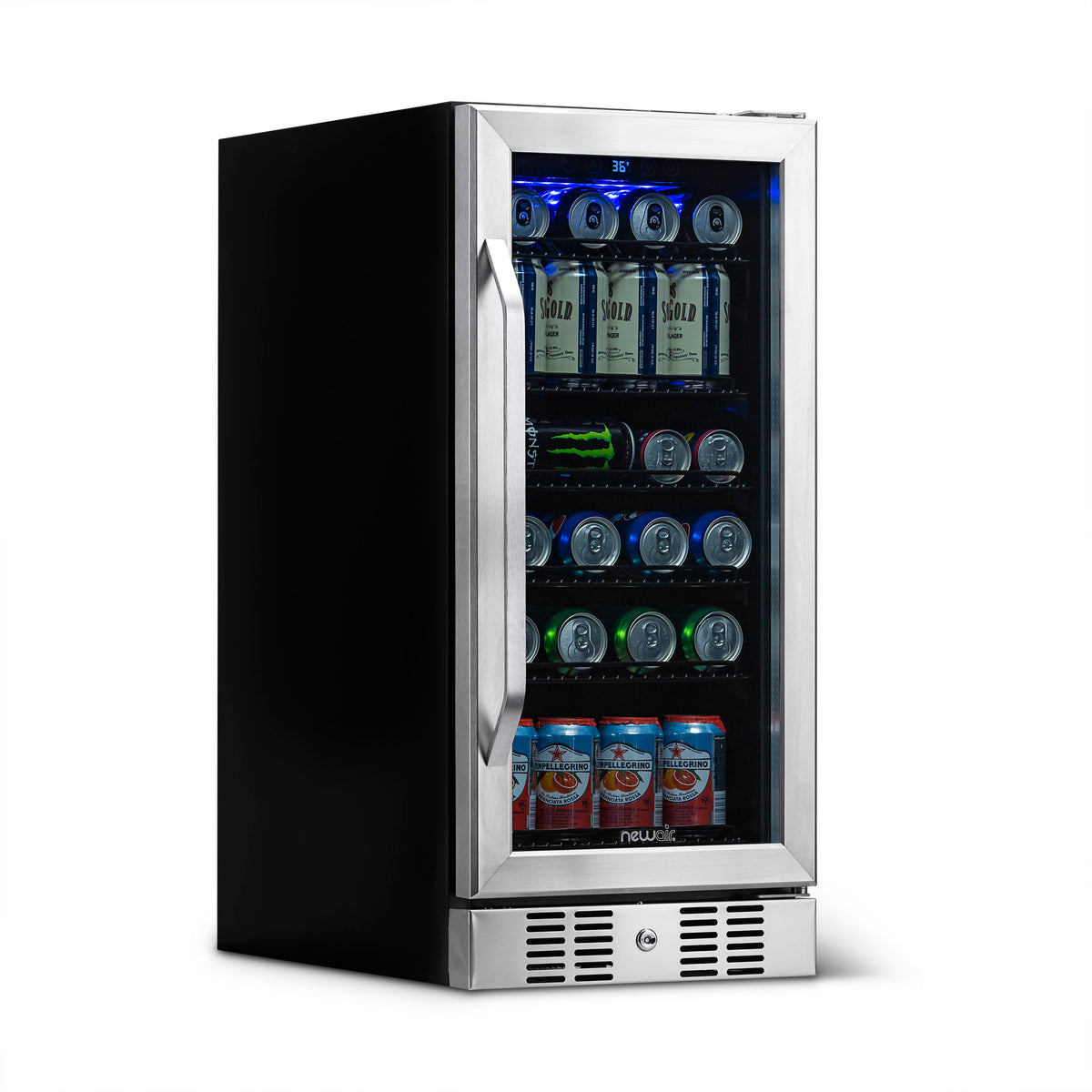
NewAir ABR-960 stainless steel beverage fridge with a glass door, door lock and front vent

NewAir, rated for 96 cans

NewAir ABR-960

96 cans · 14.8 in wide · one zone

Ask NewAir for the air gaps before you build it in. The manual doesn't give them.

Check price at Amazon (opens in a new tab)

Summit gives capacity in cubic feet, not cans: 2.45 for the SCR1536BG and 2.6 for the ALBV15. Our can-capacity guide explains why can counts vary so much.

For wine
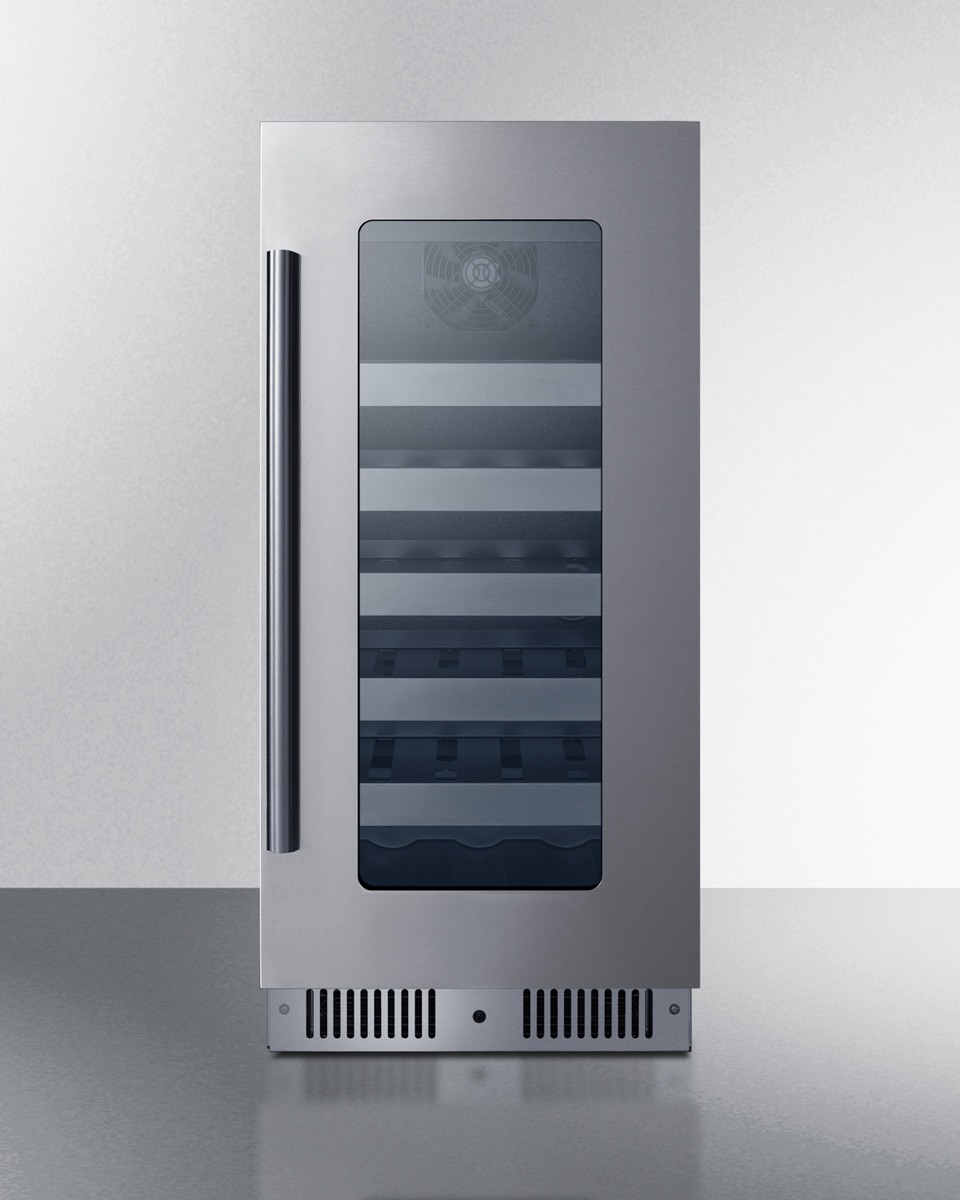
Summit CL155WC1 wine fridge with a stainless-trimmed glass door and pull-out shelves

One zone, every built-in gap in the manual

Summit CL155WC1

20 bottles · 14.88 in wide · one zone

20 bottles on the shelves plus 3 short ones. Needs 15.38 × 24.88 in with its gaps.

Check price at Amazon (opens in a new tab)
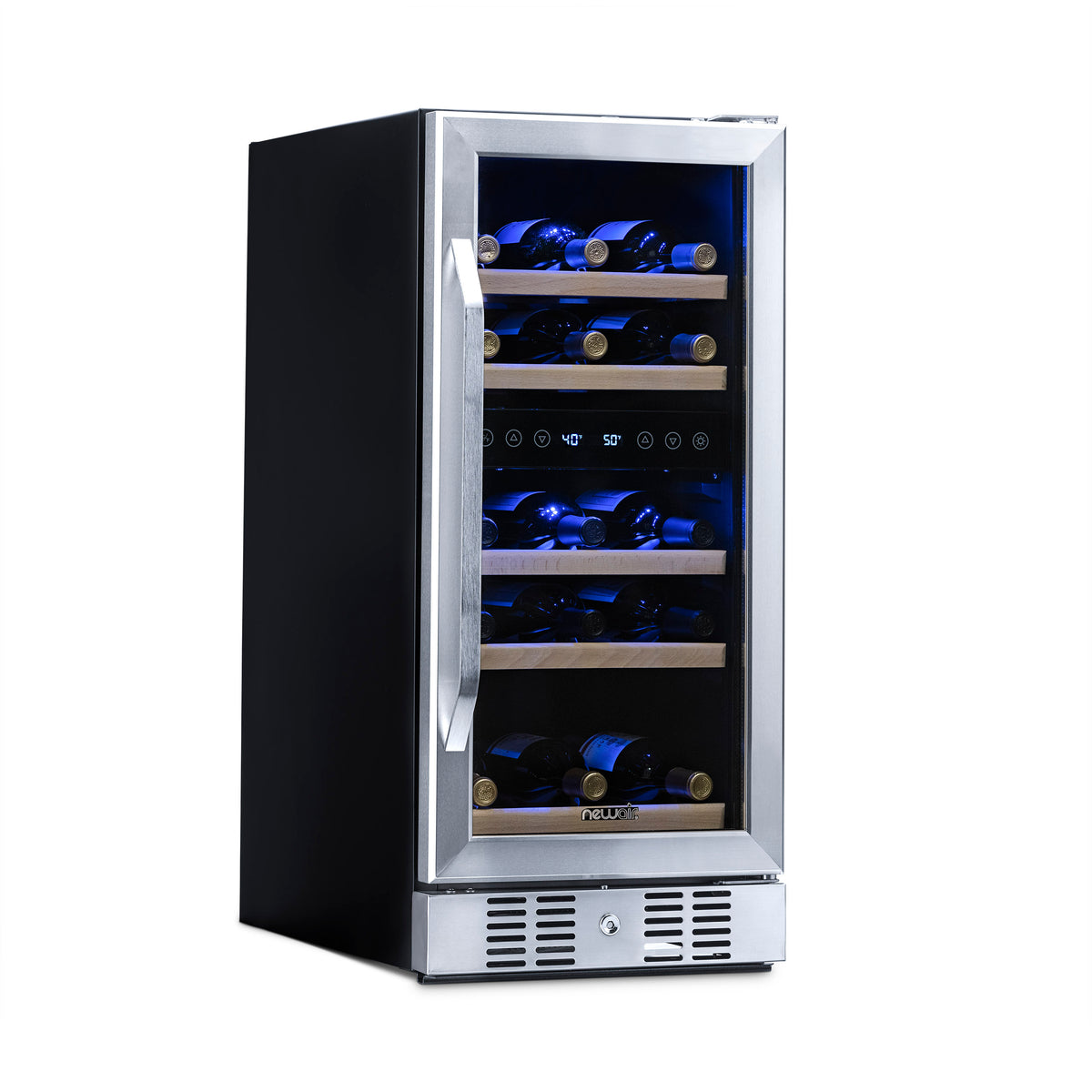
NewAir AWR-290DB stainless steel wine fridge with a non-recessed front kickplate

Two zones, for reds and whites

NewAir AWR-290DB

29 bottles · 14.8 in wide · two zones

Ask NewAir for the air gaps before you build it in. The manual doesn't give them.

Check price at Amazon (opens in a new tab)
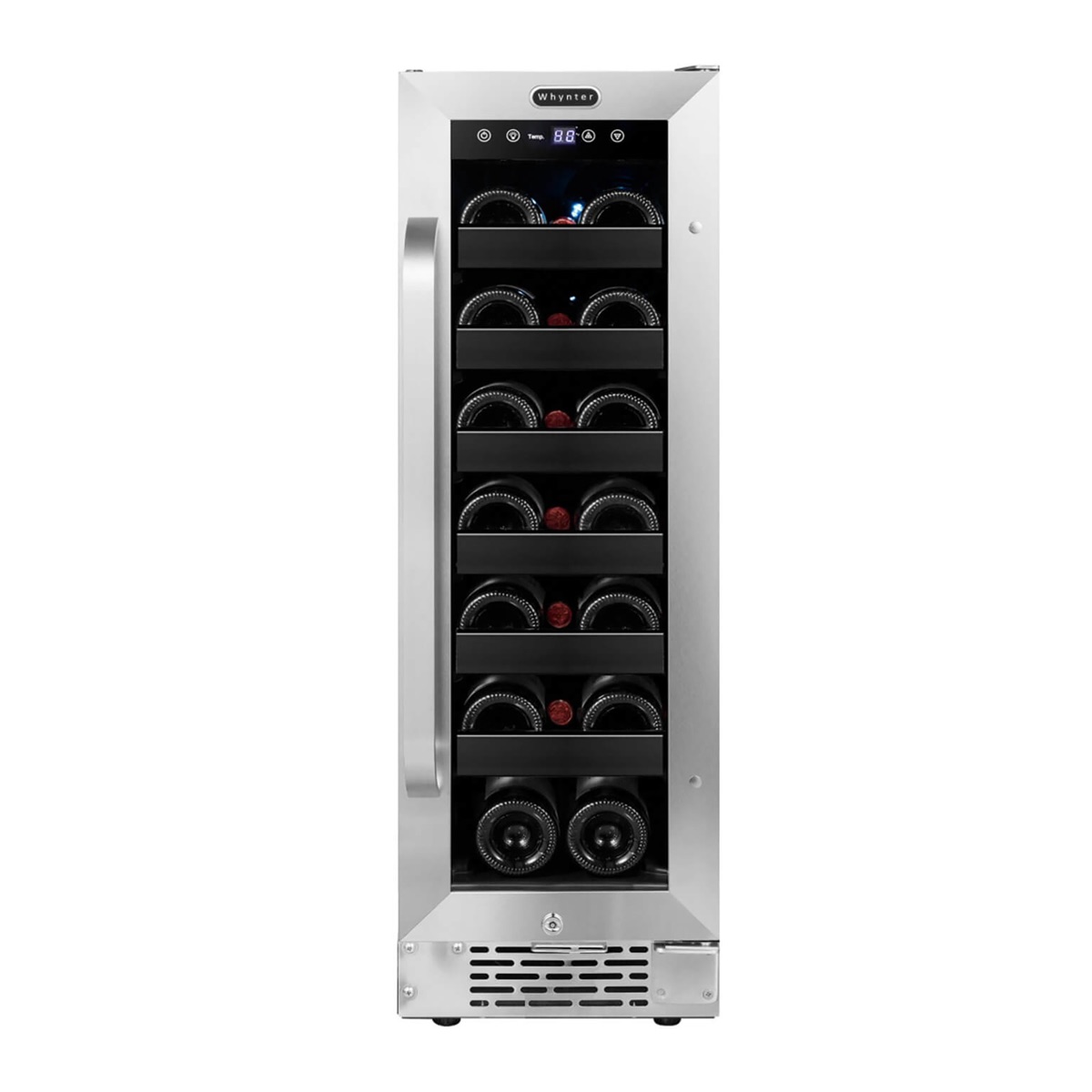
Whynter BWR-208SB narrow stainless wine fridge with a glass door, lock and pull-out shelves holding bottles

For a 12-inch slot instead

Whynter BWR-208SB

20 bottles · 11.75 in wide · one zone

20 bottles, 11.75 in wide. Ask Whynter about the back gap.

Check price at Amazon (opens in a new tab)

Not sure you need two zones? Our single or dual zone guide helps you decide.

See all the drinks fridge specs
Drinks fridges for a 15-inch slot compared. These are the manufacturer's figures, not our own measurements.
What to checkSummit SCR1536BGSummit ALBV15Whynter BBR-838SBWhynter BBR-801BGNewAir ABR-960
Size (W × D × H)14.75 in × 22.75 in × 34.00 in; 24.63 in deep with handleWidth × depth × height. The manual’s table agrees. The product page lists the cabinet at 33.88 in high and 34 in nominal, so plan around 34 in. With the door open to 90°, it needs 36.25 in of depth.14.88 in × 23.63 in × 32.00 in; 25.38 in deep with handleWidth × depth × height, using the larger figure where the documents differ. The manual’s table gives 14⅞ in wide and 22¾ in deep; the product page gives 14.75 in wide and 23.63 in deep. With the door open to 90°, it needs 38.25 in of depth.14.75 in × 22.25 in × 34.00 in; 24.25 in deep with handleWidth × depth × height. The body figures are the manual’s; the depth with the handle comes from the product page.15.00 in × 22.50 in × 33.75 inWidth × depth × height. The handle is recessed, and neither document gives a separate depth with it.14.80 in × 22.60 in × 33.75 in; 24.25 in deep with handleWidth × depth × height, from the product page. The manual says 14.8 in × 22.4 in × 33.9 in. Plan around the larger figures.
Weight77 lbThe manual gives no weight.68 lbThe manual gives no weight.72 lb68 lb76 lb
Built-in or freestandingBuilt-in or freestanding, front-breathingBuilt-in or freestanding, front-breathing; sized for 32 in ADA countersBuilt-in or freestanding, with a front ventBuilt-in or freestanding, with a front ventBuilt-in or stand-alone, per the product pageThe manual refers to a built-in structure and says to keep ventilation openings clear. It also says to keep the front kick-plate free of obstruction and never to operate the unit behind closed doors.
Air gap it needsBuilt in: ¼ in at each side, 2 in at the back, ⅛ in at the topThe manual words these as advice (“it is better to keep at least”). For freestanding use it suggests 5 in at the back and sides and 4 in on top. Its cutout table lists a 15 in × 22¾ in × 34⅛ in opening, which leaves less room than those gaps. Ask Summit which to follow before you build it in.Built in: ¼ in at each side, 2 in at the back, ⅛ in at the topThe manual words these as advice (“it is better to keep at least”). For freestanding use it suggests 5 in at the back and sides and 4 in on top. Its cutout table lists a 15 in × 22¾ in × 32⅛ in opening, which leaves less room than those gaps. Ask Summit which to follow before you build it in.Built in: ¼ in at each side and the top; no back figureFor freestanding use the manual suggests 5 in at the back and sides, with no figure for the top. Its minimum cabinet opening is 15.05 in wide, less than the body plus ¼ in at each side (15.25 in). Ask Whynter which to follow, and about the back gap, before you build it in.Built in: ¼ in at each side and the top; no back figureFor freestanding use the manual suggests 5 in at the back and sides, with no figure for the top. Its minimum cabinet opening is 15 in wide, less than the body plus ¼ in at each side (15.50 in). Ask Whynter which to follow, and about the back gap, before you build it in.No figures in the manualReplies in the product page’s Q&A conflict: one says 0.25 in at the sides and back, another says 2.5 in at each side. Ask NewAir in writing for your setup.
Door and shelvesReversible glass door with a factory lock; 3 adjustable chrome shelvesReversible glass door with a lock and two keys; 3 adjustable glass shelvesReversible glass door with a lock and two keys; 3 large shelves and 1 smallReversible glass door with a lock and two keys; 4 slide-out shelvesThe product page’s spec table says 3 shelves. The manual and the page’s feature list say 4.Door lock; 5 racks. Door reversal isn’t covered in the manualThe manual’s parts list shows a lock and a right upper hinge. A NewAir reply in the product page’s Q&A says the door isn’t reversible. The page says the shelves adjust and lists 5 racks.
How much it holds2.45 cu ft; no can count given2.6 cu ft; no can count given112 standard 12 oz cans; 3.0 cu ftThe cubic feet come from the product page. Its headline says 128 cans, but its own shelf-by-shelf count adds up to 112, the manual’s figure.100 standard 12 oz cans; 3.0 cu ftThe manual calls 100 its approximate maximum, counting cans stacked in bulk. The product page says 128 cans.96 standard cans; 3.2 cu ftThe can count comes from the manual’s cover and the product page, and no can size is given. The page calls this eight six-packs, but 96 cans is 16.
Temperature rangeOne zone, 36–43°FOne zone, 36–43°FOne zone, 34–54°FOne zone, 34–54°FOne zone, 36–66°FDigital controls in 1-degree steps. The product page says 37–66°F.
Room temperature it needsNot below 60°FThe manual also gives 44–90°F as a range, but says indoor-only models like this one shouldn’t go where the temperature falls below 60°F.72–78°F recommended; not below 60°FAbove 60°F and below 90°F; 72–78°F recommendedAbove 60°F and below 90°F; 72–78°F recommendedNo room temperature range statedThe manual lists climate class T/ST/N/SN without explaining it, and the warranty excludes extreme temperatures.
Where you can use itIndoors only; home or commercial useIndoors onlyIndoors, away from heat and moisture; not on carpetIndoors; not on carpet“Household, office and similar environments”The product page calls it “ideal for commercial & home use,” but the manual’s warranty excludes commercial use. Avoid excessively moist or humid places.
Power115 V, 60 Hz, 1.0 A; grounded three-prong outlet on a 15 A circuit115 V, 60 Hz, 1.0 A; 15 A circuit115 V, 60 Hz, 0.9 A; grounded three-prong outlet on a 15 A circuit115 V, 60 Hz, 1.0 A, 80 W; 15 A circuit110–120 V, 60 Hz, 90 W, 1.2 A. Never use an extension cord
NoiseNo dB figure found33 dB, per the product pageThe manual gives no noise figure.Under 38 dBA, per the product pageThe manual gives no noise figure.Under 42 dBA, per the product pageThe manual gives no noise figure.No dB figure foundThe product page calls it quiet without giving a figure.
Yearly energy use250 kWh a year, per the product page280 kWh a year, per the product pageNo annual kWh figure foundThe product page’s 85 W is a power rating, not annual use.1.05 kWh per 24 hoursNo annual kWh figure found90 W is a power rating, not annual use.
Warranty1 year parts and labor; 5 years on the compressor (part only)1 year parts and labor; 5 years on the compressor (part only)One-year limitedFor the original owner in the 48 continental states.One-year limited1 year (manual); 2 years (product and warranty pages)NewAir’s manual says one year of parts coverage from purchase. The product page says “2-Year Warranty Included.” NewAir’s warranty page says two years for purchases on or after November 12, 2025, “unless otherwise stated in your product’s manual.” Get the term in writing before you rely on it, especially if you buy from another seller.
See all the wine fridge specs
Wine fridges for a 15-inch slot compared. These are the manufacturer's figures, not our own measurements.
What to checkSummit CL155WC1NewAir AWR-290DBWhynter BWR-208SB
Size (W × D × H)14.88 in × 22.88 in × 34.00 in; 24.63 in deep with handleWidth × depth × height, using the larger figure where the documents differ. The manual’s table gives 14⅞ × 22¾ × 34 in; the product page gives 14.75 × 22.88 × 33.75 in.14.80 in × 22.60 in (24.25 in with handle) × 33.75 in11.75 in × 22.50 in × 34.00 in; 24.50 in deep with handleWidth × depth × height. The depth with the handle comes from the product page, whose spec table also lists 22.25 in deep. Plan around 22.50 in.
Weight74 lbThe manual gives no weight.79 lb (manual); 70 lb (product page)The two NewAir documents disagree. Plan the move around the heavier figure. The manual lists a 94 lb shipping weight.71 lb (manual); 62.61 lb (product page)
Built-in or freestandingBuilt-in or freestanding, front-breathingSold as built-in or stand-alone. The manual is titled “15” Built-in” and says never to install or operate it behind closed doorsThe product page describes front venting and says it can slide into base cabinets. The manual requires the front kick-plate to stay unobstructed.Built-in or freestanding, with a front vent
Air gap it needsBuilt in: ¼ in at each side, 2 in at the back, ⅛ in at the topThe manual words these as advice (“it is better to keep at least”). For freestanding use it suggests 5 in at the back and sides and 4 in on top. Its cutout table lists a 15 in × 22¾ in × 34⅛ in opening, which leaves less room than those gaps. Ask Summit which to follow before you build it in.No numeric side, top or back clearance foundAsk NewAir for the cutout and clearances in writing before building it in.Built in: ¼ in at each side and the top; no back figureFor freestanding use the manual suggests 5 in at the back and sides, with no figure for the top. Its minimum cabinet opening is 11.85 in wide, less than the body plus ¼ in at each side (12.25 in). Ask Whynter which to follow, and about the back gap, before you build it in.
Door and shelvesReversible glass door with a lock in the kickplate; 5 removable shelvesDoor-opening clearance and door reversal are not covered. Five removable racks are listedThe manual covers fitting the handle, which adds 1.65 in to the depth.Reversible door with a lock and two keys; 6 pull-out shelves
How much it holds20 Bordeaux or Burgundy bottles on the shelves, plus 3 shorter bottles on the floorThe page’s spec table rounds this to 23 bottles. The floor takes bottles up to 10¾ in tall.29 “standard wine bottles”; 3.2 cu ftNewAir doesn’t define “standard” for this model or say how the 29 split between zones. Treat 29 as a maximum.20 standard 750 ml bottles
Temperature rangeOne zone, 41–68°FUpper 40–50°F; lower 50–66°FThe product page text says 40–55°F for the upper zone. ChillShelf uses the manual.One zone, 40–65°F
Room temperature it needs72–78°F recommended; not below 60°FNo numeric room-temperature range foundThe warranty excludes abnormal conditions such as extreme temperatures.Above 60°F and below 90°F; 72–78°F recommended
Where you can use itIndoors only“Household, office and similar environments.” No outdoor rating foundThe product page also mentions garages and commercial use, but the warranty excludes commercial use. Ask before relying on either.Indoors, away from heat
Power115 V, 60 Hz, 1.0 A; 15 A circuit110–120 V, 1.2 A, 60 Hz, 90 W. Grounded outlet; never an extension cord115 V, 60 Hz, 80 W, 0.9 A; 15 A circuit
Noise32.1 dB, measured by SummitThe manual gives no noise figure.No dB figure foundThe product page calls it “quiet” without a measurement, so ChillShelf makes no noise claim.Under 38 dBA, per the product pageThe manual gives no noise figure.
Yearly energy useNo annual kWh figure foundNo annual kWh figure found90 W is a power rating, not annual use.No annual kWh figure found80 W is a power rating, not annual use.
Warranty1 year parts and labor; 5 years on the compressor (part only)1 year parts (manual); 2 years (NewAir warranty page)NewAir’s manual says one year of parts coverage from purchase. NewAir’s warranty page says two years for purchases on or after November 12, 2025, “unless otherwise stated in your product’s manual.” Get the term in writing before you rely on the longer one.One-year limited
Worth double-checking before you order
  • Whynter can counts. The BBR-838SB and BBR-801BG product pages both say 128 cans. Their manuals say 112 and 100.
  • Summit sizes. The ALBV15 and CL155WC1 manuals give slightly different sizes from their product pages. We plan around the larger figure each time.
  • Summit room temperature. Its manuals give more than one room temperature range. All three say not to install these indoor models anywhere that falls below 60°F.
  • Open floor needs more room. If you stand one of these on open floor instead, Summit asks for 5 inches at the back and sides and 4 on top, and Whynter for 5 inches at the back and sides.

What we don’t know yet

We can’t tell you how quiet these are in a real kitchen, how steady they hold temperature, or what they cost to run. Some makers print a noise figure and some don’t. Summit gives a yearly energy figure for its two drinks models, Whynter a daily one for the BBR-801BG, and the rest give none.

Each model has its own page with every spec and where it came from. Start at all fridges.

How this was made. Drafted with AI, based on manuals, product pages and other published documents, not hands-on testing. Figures were checked against those documents. A person hasn't yet reviewed this article. See how we check.

Some links on this page earn us a commission, at no extra cost to you. Read our affiliate disclosure.

Product photos: Summit Appliance, Whynter, NewAir.

ChillShelf is owned and published by Charles McQuain.